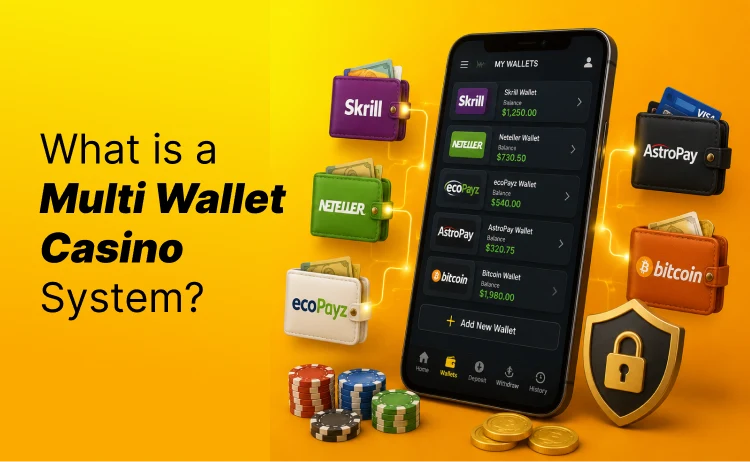
Single Wallet vs Multi Wallet Casino Systems are two competing wallet presentations and architectures for operators offering casino, sportsbook, and slots. A single wallet system presents all player funds (casino, sportsbook, slots, and other products) in one unified balance with one wallet UI. A multi wallet system maintains those same funds in one backend account but displays separate wallet tabs or wallet interfaces for each product line.
The choice determines a player’s
- Cross-product behavior
- Retention rates
- Operational reporting complexity,
The wallet architecture is one of the most important infrastructure decisions for operators expanding beyond a single product vertical. Since this architecture choice directly affects player experience, operational efficiency, reconciliation accuracy, and long-term platform scalability, your decision must not be entirely based on budget. Operators looking for a ready-to-launch setup often opt for a turnkey casino platform with unified wallet architecture to bypass these complex foundational choices from day one.
This guide breaks down the technical and operational realities behind Single Wallet vs Multi Wallet Casino Systems, explains where each model succeeds, and highlights the trade-offs operators often overlook during platform selection.
Spin, Play, Celebrate—Only at TIGCasino
What is a Single Wallet Casino System?
A single wallet system consolidates all player funds across casino, sportsbook, and slots into one visible balance, with one unified wallet UI where players view and manage all their money in one place.
For players, this creates a seamless wallet casino experience as switching between products feels natural because there is no transfer process, no balance allocation decision, and no need to track funds across multiple interfaces.
A single window gives the players the information they need, whether it’s funds availability, transaction log, and more. Players are more likely to move from casino to sportsbook, or vice versa, when no wallet action is required between products.
From an operational perspective, a single wallet casino platform is also easier to manage as it ensures;
- Accounting teams reconcile one visible balance
- Support teams handle fewer wallet-related tickets
- Compliance reporting benefits from a unified financial view.
For operators expanding into multiple verticals, this simplicity in how you build and operate the wallet can reduce operational overhead while improving player retention.
What is a Multi Wallet Casino System?
A multi wallet system displays a separate wallet interface for each product line, such as Casino Wallet, Sportsbook Wallet, and Slots Wallet, even though the underlying financial account remains unified.
The key difference is the behavioral difference in how players visualize their wallet balances and transaction logs. This allows players to decide how much money belongs to each vertical and even vertical-related activity. For instance, a sportsbook-focused customer may reserve funds exclusively for betting, and that too betting on the next football match, and avoid using those funds for casino play.
For operators, multi wallet architecture introduces additional UI complexity because multiple wallet interfaces must be maintained and supported; however, they get clarity on;
- Product-level balances
- Revenue attribution
- Affiliate performance
In addition to delivering a better player experience, some operators report smoother audit discussions when product-level wallet segregation is clearly visible, even when the underlying ledger remains unified. Although a multi wallet casino platform architecture is not a regulatory requirement, it can simplify operational conversations during reviews.
Although a multi wallet casino platform architecture is not a regulatory requirement, it can simplify operational conversations during reviews. However, operators who require this level of granular control often invest in custom casino software for advanced wallet management to handle the nuanced backend logic.
Single Wallet vs Multi Wallet Casino System | Workflow in Action
Single Wallet vs Multi Wallet Casino Comparison | Decision Matrix
Advantages of Single Wallet Systems
- Frictionless Cross-Product Play: Players never need to think about where their money sits as they just deposit once and move freely between products.
- Simplified Player Onboarding: A single deposit in the wallet means the entire balance is accessible to the players for engaging with all products and games without making allocation decisions and transferring balance to other wallets.
- Better Retention Across Verticals: Since a single wallet system ensures users won’t have to transfer balance between different products, players can use the same balance across all products, which removes removes barriers, offering better retention across verticals.
- Unified Compliance & Reporting: One visible balance creates a cleaner audit trail, which ensures seamless AML monitoring, KYC verification, and financial reporting using a unified account structure, reducing compliance complexity. This centralized data pool also heavily fortifies secure wallet transactions and fraud prevention systems by making anomalous player behavior easier to spot.
- Promotional Flexibility: With a single wallet casino platform, bonuses can be used across the casino, sportsbook, and slots without product restrictions. This creates simpler promotions and reduces unused bonus balances trapped inside individual product wallets.
Advantages of Multi Wallet Casino System
- Player Perceived Control: Separate balances function like budgeting tools, which is a high-demand feature of advanced-level players. They can consciously allocate funds to different activities, creating a stronger feeling of control over spending and risk management.
- Clear Product Attribution & Accountability: Each wallet reflects product-specific performance, allowing players to see whether they are profitable in sportsbook activity or losing money in casino games, improving transparency.
- Easier Affiliate & Partner Management: Multi wallet architecture naturally supports product-level revenue attribution, which means you can calculate affiliate commissions, partner settlements, and performance reporting becomes easier because activity is already segmented.
- Regulatory Perception: Regulators don’t require wallet segregation as a part of their compliance requirements, which means operators are not obligated to have separate wallet balances. However, creating separate wallet displays can delivers a stronger impression of control and oversight during compliance reviews and licensing discussions.
- Segment-Specific Player Experience: Sports bettors can focus on sportsbook activity without casino distractions as product-specific interfaces allow operators to create cleaner experiences tailored to different player segments.
Conclusion
For most operators, a single wallet architecture is the better choice. However, the real decision is whether you prioritize cross-product engagement and operational simplicity or attribution clarity and perceived player control.
At TIGCasino, we have observed that operator experience consistently shows that single wallet systems generate 40-50% higher cross-product adoption, creating meaningful long-term revenue growth.
If you are planning a multi-vertical launch, invest in a single wallet casino platform unless affiliate requirements or regulatory obligations clearly justify a multi wallet approach. Contact us to design a wallet system aligned with your growth strategy, regulatory requirements, and player experience goals.
Step Into a World of Winning with TIGCasino
FAQ'S