The rise of crypto gambling platforms has changed how online casinos process payments, manage player balances, and operate backend systems. Unlike traditional casinos that depend on banks and card processors, crypto casino platforms run on blockchain-connected infrastructure designed for faster transactions, multi-currency support, and automated payment processing.
But from the outside, most players only see the front end. They register, deposit crypto, launch a game, and withdraw winnings. What they do not see is the complex backend ecosystem working behind every click.
A modern blockchain casino platform combines wallet infrastructure, game aggregation APIs, transaction monitoring systems, player management tools, security engines, and real time payment processing into one operational framework. Every action inside the casino triggers communication between multiple backend systems simultaneously.
In this guide, we will break down exactly how crypto casinos work, how crypto casino payments are processed, what technology powers these platforms, and how operators manage large scale crypto gambling infrastructure efficiently.
If you are exploring the operational side of iGaming platforms, you can also read this detailed guide on online casino software development to understand how casino systems are structured from the ground up.

A crypto casino online platform is an online gambling system that allows users to play casino games using cryptocurrencies instead of traditional fiat payment methods.
At its core, the platform connects several operational layers together:
The purpose of the platform is simple. It creates an environment where players can deposit cryptocurrency, place bets, receive winnings, and withdraw funds through blockchain-connected systems.
Unlike standard online casinos, crypto gambling platforms are heavily dependent on backend automation. Deposits, confirmations, wallet management, and withdrawals are all tied directly to blockchain activity.
Most modern operators also rely on advanced aggregation architecture that connects hundreds of games through API integrations. This is why many operators prefer scalable infrastructure models such as multi tenant casino platforms, especially when expanding across multiple brands or regions.
A crypto casino backend is made up of several interconnected systems. Each component handles a different operational task, but together they create a seamless gambling experience for the player.
Wallet infrastructure is the backbone of every crypto casino platform.
The wallet system is responsible for generating deposit addresses, tracking blockchain transactions, storing digital assets, and processing withdrawals. Without this layer, the casino cannot handle crypto payments securely.
Most platforms divide wallet infrastructure into multiple environments:
When a player sends cryptocurrency to the casino, the backend wallet engine immediately begins monitoring the blockchain network for confirmation activity.
Platforms that support multiple cryptocurrencies must also maintain separate wallet infrastructure for networks such as:
This multi-chain complexity is one reason operators increasingly choose specialized crypto casino software solutions rather than building the entire infrastructure internally.
Most crypto casinos do not develop every game themselves. Instead, they connect third party game providers through aggregation APIs.
The game aggregation layer acts as a bridge between the casino platform and external providers supplying:
When a player launches a game, the casino backend exchanges session data with the provider through API communication. This process includes player authentication, balance verification, currency information, and jurisdiction checks.
Operators looking to scale their libraries often integrate hundreds of providers through centralized systems. This guide on how to integrate 200 casino game providers explains how aggregation architecture supports large scale casino ecosystems.
Live gaming infrastructure has also become a major part of crypto casino operations. Many operators now depend on advanced streaming and studio integrations from leading live dealer casino software providers.
Player management systems control everything related to user activity inside the platform.
This includes:
From the player perspective, the process feels simple. But internally, the backend constantly synchronizes multiple systems to maintain accurate balances, betting records, and transaction histories in real time.
Modern crypto casinos also connect player management systems with fraud prevention engines and responsible gaming controls.
Crypto casino payments depend on blockchain-compatible payment infrastructure.
The payment gateway handles:
Some operators use self-hosted wallet systems, while others rely on third party crypto payment providers.
Stablecoin integration has also become increasingly important because it helps operators reduce exposure to cryptocurrency volatility during treasury management.
Payment infrastructure plays a direct role in platform stability and user trust. That is why many operators invest heavily in fraud detection systems designed specifically for iGaming environments. This breakdown of payment fraud in online casino platforms explains how casinos manage financial risks at scale.
Security is one of the most important parts of crypto casino infrastructure.
Unlike traditional casinos, blockchain transactions are irreversible. Once funds leave a wallet, recovering them becomes extremely difficult.
To reduce operational risk, crypto casino backend systems continuously monitor:
Modern platforms also use:
Security monitoring works silently in the background while players interact with games normally.
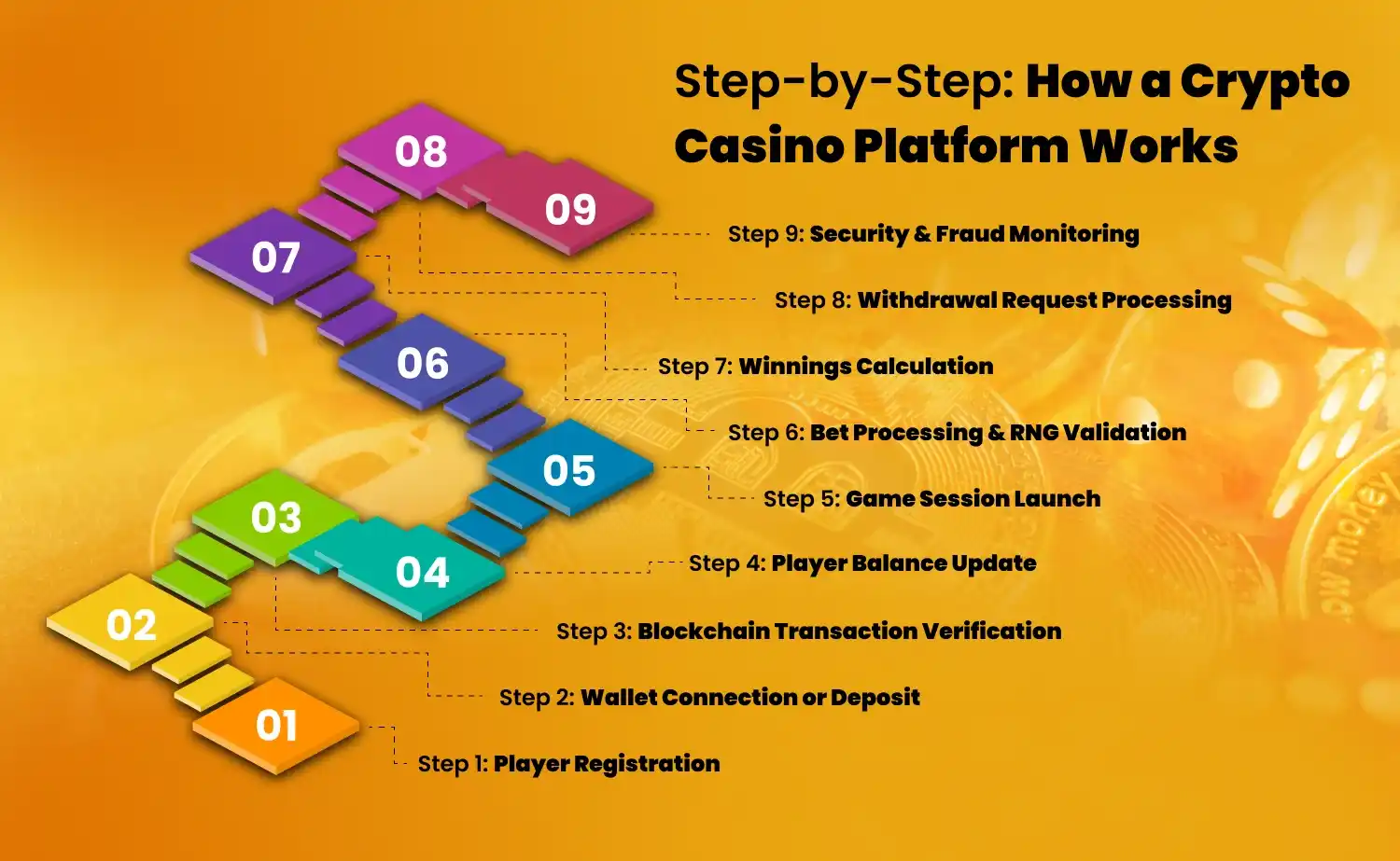
Understanding how crypto casinos work becomes easier when you break the entire process into operational stages.
Here is what happens behind the scenes from registration to withdrawal.
The process starts when a player creates an account or connects a crypto wallet.
Depending on platform structure, registration may involve:
Once registration is complete, the backend creates a player profile and links it with internal systems such as wallet management, game access, transaction history, and security monitoring.
After registration, the player deposits cryptocurrency into the platform.
The casino generates a unique wallet address tied to the player’s account. Once the player sends crypto to that address, the backend starts monitoring the blockchain network.
At this stage, the player usually sees a pending transaction while the backend verifies incoming blockchain activity.
The infrastructure handling this process depends heavily on the crypto casino wallet integration layer.
When the transaction appears on the blockchain, the platform verifies several conditions before crediting the balance.
The backend checks:
Different blockchain networks require different confirmation thresholds. Bitcoin transactions generally take longer than faster chains such as Tron or Solana.
Once the transaction is verified, the accounting engine updates the player balance instantly.
Internally, the platform records:
Most platforms maintain separate operational ledgers to improve betting speed without waiting for blockchain interaction during every game round.
When a player opens a casino game, the backend communicates with the game provider through APIs.
The request usually includes:
The provider then launches the game environment within seconds.
This type of real time communication is one of the core pillars of crypto gambling platform architecture.
Every bet triggers a chain of backend operations.
The process normally works like this:
The backend records every transaction, bet result, and timestamp for auditing purposes.
Platforms handling large traffic volumes require highly optimized systems to prevent lag or synchronization issues. Performance bottlenecks are one reason operators focus heavily on backend optimization and mobile stability. This article on why mobile casino apps lag and crash explains how infrastructure directly impacts player retention.
If the player wins, the payout engine calculates rewards automatically.
The system evaluates:
Winnings are then credited to the player balance in real time.
Withdrawals involve more backend verification than deposits because operators must reduce fraud risk before releasing funds.
The system checks:
After approval, the wallet infrastructure signs the blockchain transaction and broadcasts it to the network.
The player receives a transaction hash that can be tracked publicly on the blockchain explorer.
Throughout the entire workflow, security systems continue analyzing player activity in real time.
The backend monitors:
Large crypto casino operations often rely on AI-assisted risk scoring systems to detect anomalies before withdrawals are approved.
Crypto casino payment processing differs significantly from traditional online casinos.
Instead of relying on banks or card processors, the platform interacts directly with blockchain networks.
The typical payment workflow looks like this:
Modern platforms also support multi-currency systems capable of handling:
Some casinos automatically convert volatile assets into stablecoins behind the scenes to improve treasury stability.
Operators building scalable infrastructure often compare operational models before choosing providers. These comparisons between B2B vs B2C casino software and the broader business model of online casino software providers help explain how backend ecosystems are commercially structured.
Provably fair gaming is one of the biggest transparency features in crypto casinos.
Unlike traditional casino systems where players simply trust the operator, provably fair technology allows users to verify game outcomes independently.
The system works using:
Before gameplay starts, the casino generates a hashed server seed. After the round ends, the original seed becomes visible so the player can confirm the result was not manipulated.
Provably fair systems are commonly used in:
This approach improves transparency without exposing the actual backend game logic publicly.
Modern blockchain casino platforms rely on a combination of backend technologies working together continuously.
Key technologies include:
APIs connect the casino platform with:
Database infrastructure stores critical operational data including balances, transactions, betting history, and player activity.
Scalable architecture is especially important for operators planning long term expansion. Many businesses exploring platform growth also evaluate broader infrastructure strategies such as how B2B platforms scale iGaming businesses.
Running a blockchain casino platform requires more than simply launching a website.
Operators typically need:
Most operators use specialized platform providers that supply:
Back-office systems help operators manage:
The operational infrastructure determines whether the platform can scale safely and process transactions efficiently.
Running a blockchain casino platform comes with technical and operational challenges that traditional casinos may not face.
Cryptocurrency prices fluctuate constantly. Operators managing large balances must protect treasury stability during market swings.
Many jurisdictions require identity verification and transaction monitoring to prevent illegal financial activity.
Crypto casinos remain high value targets for:
This makes security infrastructure one of the most important operational investments.
Network congestion can slow deposits and withdrawals, especially during periods of high blockchain activity.
Supporting multiple blockchain networks significantly increases backend operational complexity because each chain requires separate wallet infrastructure and monitoring systems.
Some operators also explore alternative crypto gambling ecosystems such as Telegram-based platforms. This analysis of Telegram casino development cost explains how those systems differ operationally from traditional web-based crypto casinos.
Understanding how a crypto casino online platform works requires looking beyond the front end interface.
Behind every deposit, wager, and withdrawal is a sophisticated backend ecosystem powered by wallet infrastructure, blockchain monitoring systems, API integrations, game aggregation technology, and real time security engines.
Modern crypto casino infrastructure is built for automation, scalability, and multi-currency support. The quality of the backend architecture directly impacts transaction speed, platform stability, fraud prevention, and long term operational growth.
As blockchain gambling continues evolving, operators that invest in scalable infrastructure and secure backend systems will be in a far stronger position to handle growing transaction volumes, expanding game libraries, and multi-chain payment ecosystems.

Raj Thomas


Request a Demo
Get a quick look at your potential earnings. Answer four simple questions and see your projected revenue for year one.
Keep in mind, this quick analysis is a preliminary guideline meant to kickstart your detailed market research. Best of luck!
Enter your email to receive your full cost breakdown, including projected net revenue, operating margin, and editable line items for your own planning.
Your inputs are used only to generate and deliver your report and are handled in line with TIGCasino's Privacy Policy.