Key Takeaways
Reviewed by TIGCasino Editors
What does it really cost to launch a competitive online casino platform in 2026, and why do estimates range from $50,000 to over $500,000?
If you are an operator in the USA or UK, you have likely seen inconsistent pricing and unclear breakdowns. That is because building an online casino today is not just about development. It is a strategic investment shaped by compliance, technology, integrations, and long-term scalability.
Costs depend on multiple factors such as licensing, payment systems, game providers, security, and player retention features. Regulatory requirements in the USA and UK further add to the complexity and impact on overall investment.
This guide will break down the real cost of developing an online casino platform, key cost drivers, business model differences, and ROI insights. The goal is to help you make informed decisions and build a profitable, future-ready casino platform in 2026.

The cost to build an online casino platform in 2026 typically ranges from $50,000 to $500,000+, depending on the complexity, business model, and regulatory requirements.
A basic casino platform with limited features and third-party integrations can cost between $50,000 and $100,000. These are often suitable for operators testing the market with a minimal setup.
A mid-tier platform with advanced features, multiple game integrations, and stronger security systems usually falls between $100,000 and $250,000. This is where most serious operators operate.
An enterprise-grade casino platform, built for scalability across multiple markets like the USA and UK, can exceed $300,000 to $500,000+. These platforms include custom development, full compliance systems, AI-driven features, and robust infrastructure.
It is important to note that development cost is only one part of the investment. Licensing, payment processing, game provider fees, and ongoing maintenance can significantly increase the total cost of running an online casino platform.
To see where your project sits inside these ranges, run your numbers through the Online Casino Cost Calculator. It takes your actual licensing, software, staffing, and marketing inputs and returns a cost breakdown specific to your build.
Before diving deeper into cost components, it is important to understand why these costs exist in the first place. The online gambling industry is expanding rapidly, pushing operators to invest in more advanced, scalable, and compliant platforms.
In 2026, the global online gambling market is expected to exceed $143 billion, with strong growth in both the USA and UK. This growth is increasing competition, raising player expectations, and tightening regulatory requirements, all of which directly impact development costs.
| Platform Type | Estimated Cost Range | Best For | Key Features Included | Limitations |
| Basic Platform | $50,000 – $100,000 | Market testing, small operators | Limited games, standard UI, basic payments, minimal compliance | Low scalability, limited retention tools |
| Mid-Tier Platform | $100,000 – $250,000 | Growing operators | Multiple game providers, advanced UI/UX, stronger security, initial compliance | Moderate scalability |
| Enterprise Platform | $300,000 – $500,000+ | Large operators, multi-market expansion | Custom architecture, AI features, full compliance (USA & UK), advanced analytics | High upfront investment |
As you move from basic to enterprise-level platforms, the cost increases due to:
Ultimately, the cost of developing an online casino platform in 2026 is directly tied to how competitive, compliant, and scalable your business aims to be.
Not all online casinos are built the same, and neither are their costs. The business model you choose has a direct impact on how much you need to invest, how quickly you can launch, and how you generate revenue.
For operators in the USA and UK, selecting the right model is not just a technical decision. It is a strategic one that affects compliance, scalability, and long-term profitability.
Each business model comes with its own cost structure, regulatory considerations, and revenue potential. Choosing the right one depends on your target market, budget, and long-term growth strategy.
Choosing between the USA and UK markets is not just a regulatory decision. It directly impacts how much you spend on development, compliance, and long-term operations. While both markets are highly profitable, their cost structures are fundamentally different.
| Factor | USA Market | UK Market |
| Licensing Structure | State-by-state licensing, costs increase with each state expansion | Single centralized license covering the UK market |
| Licensing Cost Impact | High if operating in multiple states | High upfront cost but more streamlined long-term |
| Compliance Requirements | Varies by state, includes KYC, AML, and reporting systems | Strict and standardized, strong focus on responsible gambling |
| Regulatory Complexity | Fragmented and complex across jurisdictions | Centralized but highly rigorous |
| Taxation Impact | Different tax rates per state, can significantly affect margins | Structured taxation model impacting overall profitability |
| Time to Market | Depends on state, some faster, others highly restrictive | Generally longer due to strict approval and compliance checks |
| Operational Costs | Increase with multi-state expansion | Higher compliance and monitoring costs |
| Scalability Cost | Expensive when scaling across multiple states | Easier to scale within a single regulated framework |
| Overall Cost Outlook | Potentially higher due to fragmented regulation and expansion costs | High upfront investment but more predictable long-term costs |
For operators, the USA offers massive scale but comes with layered costs as you expand across states. The UK, on the other hand, requires stronger upfront investment in compliance but provides a more structured and predictable operating environment.
Choosing the right development approach is one of the biggest cost decisions an operator will make. Each model comes with a different level of investment, control, and scalability.
| Model | Estimated Cost Range | Time to Market | Control Level | Best For |
| White Label | $15,000 – $50,000 | Very fast | Low | Quick market entry, low budget operators |
| Turnkey | $50,000 – $150,000+ | Moderate | Medium | Operators seeking balance between cost and customization |
| Custom Development | $150,000 – $500,000+ | Long | Full | Large operators aiming for full control and scalability |
The right choice depends on your budget, timeline, and growth strategy. Operators looking to test the market may prefer lower-cost solutions, while those aiming for long-term dominance often invest in scalable, custom-built platforms.
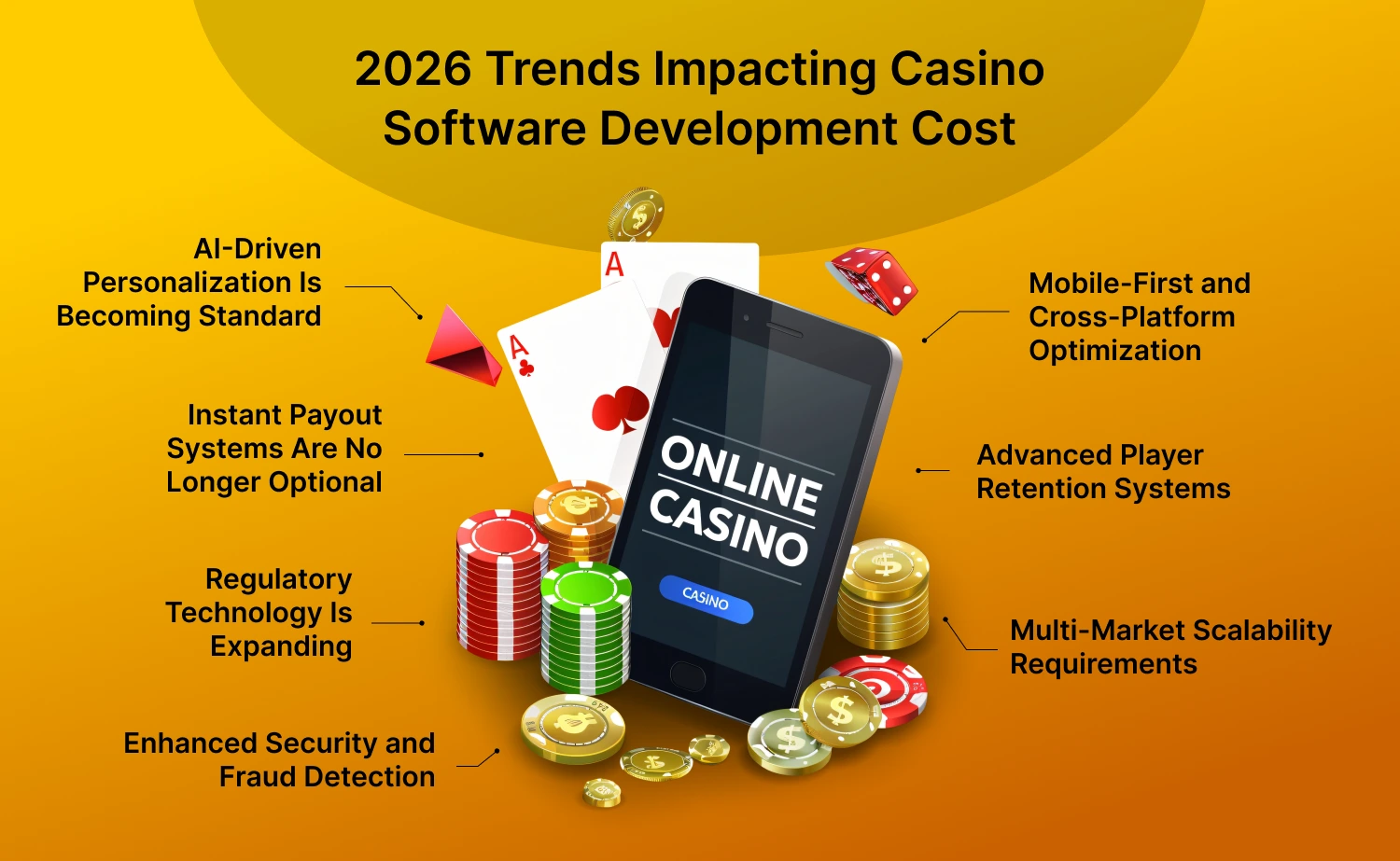
The cost of building an online casino platform in 2026 is not just influenced by features and compliance. It is increasingly shaped by industry trends that are raising the standard for what a competitive platform should offer.
Operators are now expected to deliver faster, smarter, and more personalized experiences, which directly impacts development and operational costs.
These trends are redefining what it takes to compete in the online casino space. Operators who invest in these areas are better positioned for growth, but they must also be prepared for the higher costs that come with building a future-ready platform.
At this stage, the decision is not just about cost. It is about how efficiently that investment turns into a scalable, compliant, and profitable casino platform. TIGCasino is built to help operators control both upfront and long-term costs while staying competitive in regulated markets like the USA and UK.
Instead of a one-size-fits-all approach, TIGCasino uses a modular architecture that allows you to build only what you need. This avoids unnecessary development expenses while still delivering a high-performance, enterprise-ready platform. Operators can launch quickly with a turnkey setup and gradually move toward customization as they scale, reducing financial risk in the early stages.
Compliance is one of the biggest hidden cost drivers, and TIGCasino addresses this at the core level. Built-in KYC, AML, and responsible gambling systems reduce the need for costly rework and help you enter regulated markets with confidence. At the same time, pre-integrated systems and optimized workflows accelerate deployment, allowing you to go live faster and start generating revenue sooner.
The platform is designed for long-term efficiency. With scalable infrastructure and multi-tenant capabilities, you can expand into new markets or launch multiple brands without significantly increasing costs. This ensures your cost per user decreases as your business grows.
If you are planning to enter or scale in the online casino market, the right platform is not just about saving money. It is about building a cost-efficient foundation that supports long-term growth and profitability in 2026 and beyond.
Building an online casino platform in 2026 is no longer just a development decision. It is a strategic investment that directly impacts your ability to compete, scale, and generate long-term revenue.
Costs can range widely depending on your approach, from lean entry models to fully customized enterprise platforms. But the real difference lies in how well you align your investment with your business model, target market, and growth strategy. Operators who focus only on upfront cost often end up overspending later due to poor scalability, compliance gaps, or limited flexibility.
The most successful operators take a balanced approach. They evaluate cost alongside factors like time-to-market, regulatory readiness, player experience, and long-term operational efficiency. This allows them to build platforms that are not only cost-effective but also sustainable in highly competitive markets like the USA and UK.
As the industry continues to evolve, expectations around technology, compliance, and user experience will only increase. Planning your investment with a long-term perspective ensures you are not just launching a platform, but building a scalable and profitable casino business.
In the end, the goal is not to spend less. It is to spend smart and build a platform that delivers consistent returns in an increasingly demanding iGaming landscape

Prish K


Request a Demo
Get a quick look at your potential earnings. Answer four simple questions and see your projected revenue for year one.
Keep in mind, this quick analysis is a preliminary guideline meant to kickstart your detailed market research. Best of luck!
Enter your email to receive your full cost breakdown, including projected net revenue, operating margin, and editable line items for your own planning.
Your inputs are used only to generate and deliver your report and are handled in line with TIGCasino's Privacy Policy.